العربية
 Español
 Pусский
 lingua italiana
 Français
 Deutsch
 Portugues



Compare solar street lights and grid-tied LED street lights for municipal, commercial, and contractor projects. Learn how to evaluate optics, controls, maintenance, resilience, and total project fit before you buy.
Not every outdoor lighting project should default to solar, and not every site should stay grid-tied. The better starting point is project context: road type, access to power, trenching difficulty, outage risk, maintenance capability, and the lighting result you actually need. The U.S. Department of Energy notes that LED roadway lighting can achieve required light levels with less than half the generated light of previous technologies because LEDs offer better optical control, while NREL notes that solar street lighting is generally more expensive than grid-tied lighting and should be evaluated carefully against site conditions and lifecycle assumptions. [1][5]
For B2B buyers, that changes the conversation. The first question is no longer “How many watts?” but “What problem is this project solving?” If the site has reliable grid access and straightforward installation conditions, a grid-tied LED street light often remains the practical baseline. If the site is remote, trenching is expensive, or resilience during outages matters, solar can become the stronger option even with a higher upfront system cost. [1][5]
Decision Chart: Solar vs Grid-Tied for B2B Projects
| Project condition | Solar street light | Grid-tied LED street light | Why it matters |
|---|---|---|---|
| Remote road, pathway, park, or rural edge | Strong fit | Possible, but civil work may be heavy | Solar avoids grid extension and trenching where infrastructure is limited. |
| Urban road with stable power and dense lighting network | Selective fit | Strong fit | Grid-tied systems are often easier to standardize in established municipal networks. |
| High concern about outages or resilience | Strong fit | Moderate fit | Solar can keep critical points lit when the grid fails. |
| Very high nightly load or limited winter sun | Needs careful sizing | Strong fit | NREL highlights runtime, latitude, season, and load demand as core solar design factors. |
| Centralized dimming, monitoring, and maintenance data | Possible, model-dependent | Strong fit | DOE highlights networked outdoor lighting controls as a path to lower energy and maintenance costs. |
Table basis: DOE roadway and controls guidance plus NREL solar street lighting project considerations. [1][2][5]
A second mistake many buyers make is treating wattage as a brightness shortcut. The National Park Service explicitly notes that light output should be discussed in lumens, not watts, and that increasing light output does not automatically create a safer nighttime environment. NPS and DarkSky both emphasize the same core design logic: use light only where needed, keep levels appropriate, choose fully shielded fixtures, and use controls so lighting is available when needed instead of running at full output all night. [3][4]
That is why optics matter so much in procurement. A good street light specification should ask for the right light distribution, not just a high efficacy claim. DOE’s roadway research points to the advantage of optical controllability in LED systems, and NPS warns that exposed light sources and poorly shielded fixtures increase glare and waste light. In practice, B2B buyers should ask suppliers for photometric files, mounting recommendations, and application guidance for road width, pole height, and spacing. [1][4]
Controls are now part of the value discussion, not an optional add-on. DOE’s model specification for networked outdoor lighting control systems was developed specifically to help cities, utilities, and agencies assess systems that can reduce energy and maintenance costs. Electrical Contractor also summarized 2024-2025 guidance showing that responsible outdoor lighting and energy savings do not need to be trade-offs, especially when dimming, lower light levels, and lower-glare products are considered together. [2][6]
For color temperature and community acceptance, warmer light deserves serious consideration. DarkSky and NPS both recommend using warm white where possible, and NPS specifically states that 2700K can provide good color rendition while reducing short-wavelength blue light compared with higher CCT products. For commercial projects, the final target should still match local code, application needs, and customer preference, but warmer specifications are increasingly relevant where glare, skyglow, and neighborhood sensitivity matter. [3][4][6]
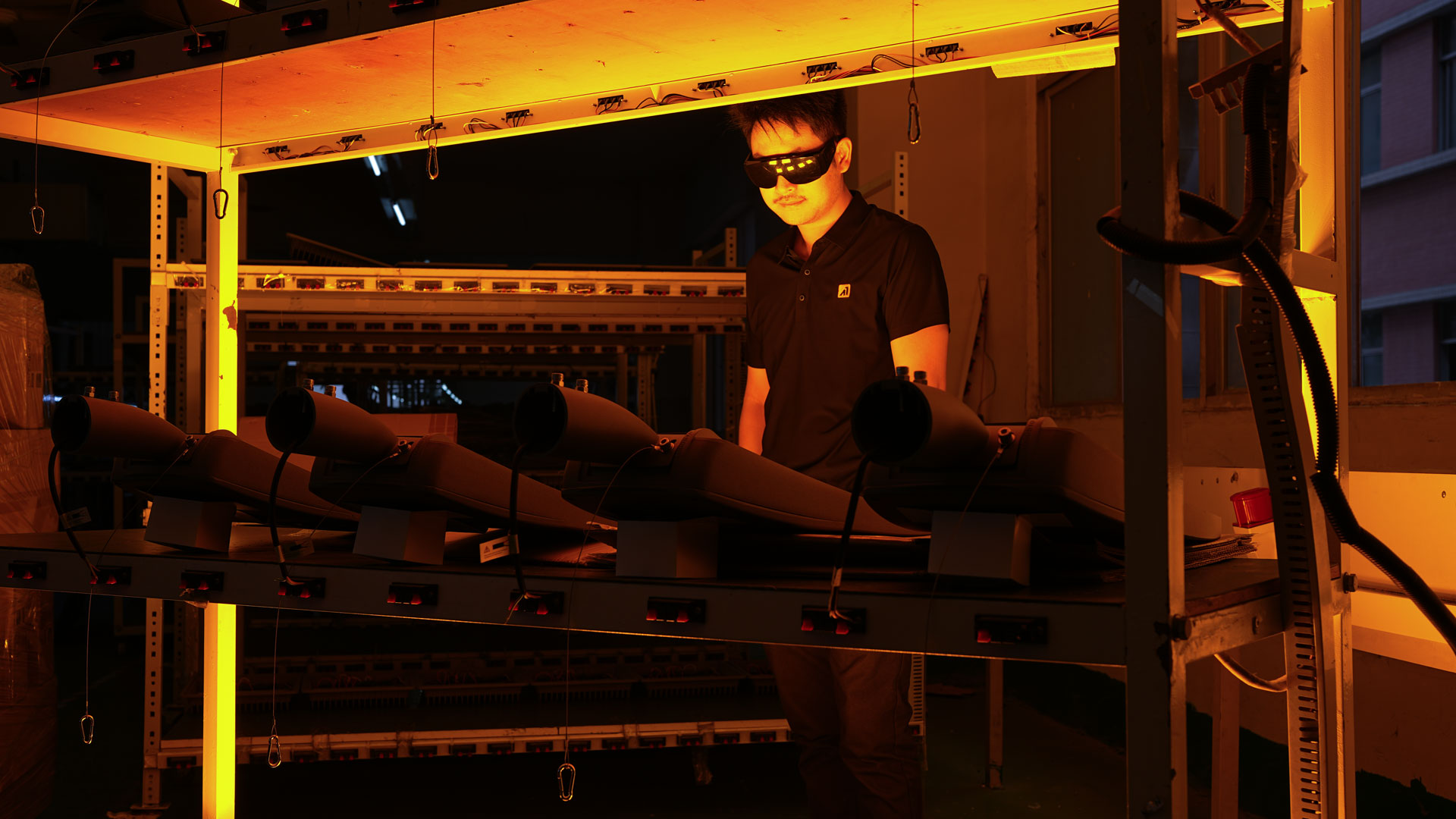
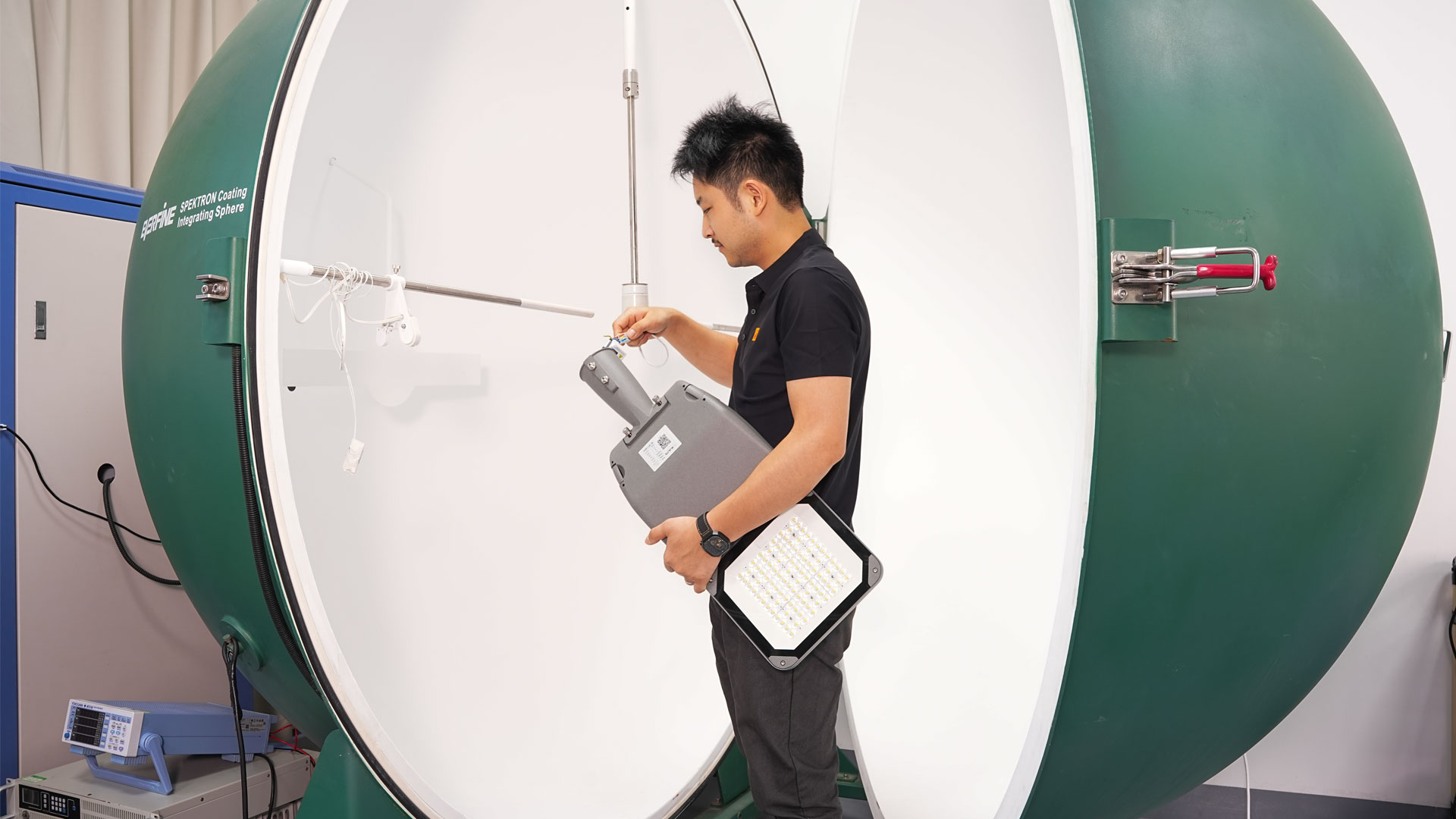
This is also where Alite can be positioned naturally in the article. On its website, Alite presents itself as an LED outdoor lighting manufacturer and OEM supplier with product lines covering project LED street lights, flood lights, garden lights, solar lights, and stadium lights. The company says it was founded in 2013, has more than 10 years in lighting, serves more than 30 countries and regions, and offers R&D, customization, quality inspection, and technical support. On the product side, the homepage highlights street-light efficacy up to 210 lm/W, while the ASP01 street light page lists up to 200 lm/W, Type I/II/III optics, NEMA and Zhaga interfaces, IP66 protection, IK08 impact resistance, and optional 10kV/20kV surge protection. [7][8][9] (alitecn.com)
That combination is commercially useful because many buyers are not looking for a single fixture; they are looking for a supplier that can support different project paths. A distributor may need a control-ready roadway luminaire for a municipal retrofit, while another customer may need an integrated solar solution for a remote site where power access is the real bottleneck. Alite’s current site structure already supports that comparison logic, and its recent content topics also show a fit with technical buyer intent, including surge protection and solar-vs-standard street-light comparisons. [7][8] (alitecn.com)
RFQ Checklist Table for Buyers
| RFQ item | What to ask for | Why it matters |
|---|---|---|
| Photometrics | IES files, distribution type, mounting height guidance | Confirms the fixture can light the target area without overlighting. |
| Controls | Photocell, dimming, NEMA/Zhaga, remote monitoring compatibility | Supports lower energy use and better maintenance planning. |
| Protection | IP / IK rating and surge protection level | Outdoor reliability depends on weather, impact, and electrical events. |
| Solar sizing | Runtime hours, autonomy days, seasonal assumptions, battery environment rating | Solar performance depends on load, latitude, season, and battery conditions. |
| Maintenance | Tool-free driver access, replaceable components, warranty scope | Reduces labor cost and improves lifecycle predictability. |
| CCT and glare strategy | Target CCT, shielding, spill-light control | Helps align with dark-sky, comfort, and community requirements. |
This checklist is derived from DOE, NPS, DarkSky, NREL, and Alite’s published ASP01 specifications. [2][3][4][5][9] (alitecn.com)
FAQs
Is solar street lighting always cheaper in the long run?
No. NREL’s review says solar street lighting is generally more expensive than grid-tied lighting, so buyers should compare capital cost, maintenance ownership, site constraints, and resilience value instead of assuming automatic savings. [5]
Should I specify wattage first?
Usually no. DOE, NPS, and DarkSky all point buyers toward lighting performance, optical control, and appropriate light levels rather than brute output. Lumens, photometrics, shielding, and controls are more useful procurement terms than watts alone. [1][3][4]
What makes a modern street light “future-ready”?
For many B2B projects, it means controllability, maintainability, and documentation: control interfaces, dimming compatibility, surge protection, proper optics, and a supplier that can support both product data and after-sales service. DOE highlights controls, and Alite’s ASP01 page shows how suppliers now package optics, interfaces, and protection into the luminaire specification itself. [2][9] (alitecn.com)
In short, the best choice is not “solar” or “grid-tied” in isolation. It is the system that best fits the site, operating pattern, maintenance model, and stakeholder expectations. For lead generation, that is also the strongest message: buyers respond better to articles that help them specify correctly than to articles that simply repeat product claims. [1][5][7][8] (alitecn.com)
- U.S. Department of Energy, “Roadway Lighting Research.”
- U.S. Department of Energy, “Model Specification for Networked Outdoor Lighting Control Systems.”
- DarkSky International, “Five Principles for Responsible Outdoor Lighting.”
- U.S. National Park Service, “Outdoor Lighting Principles.”
- National Renewable Energy Laboratory, “Solar Street Lighting: Highland Park Pathways to Power.”
- Electrical Contractor Magazine, “The Right Light for Night: Calculating responsible outdoor lighting.”
- Alite Lighting homepage and category pages. (alitecn.com)
- Alite Lighting, “About Alite.”
- Alite Lighting, “ASP01 Street Light” product page. (alitecn.com)