العربية
 Español
 Pусский
 lingua italiana
 Français
 Deutsch
 Portugues




How Smart Outdoor LED Lighting Helps B2B Projects Reduce Energy and Maintenance Risk
A practical guide to photometrics, adaptable controls and serviceable luminaires for roads, parks and industrial sites.
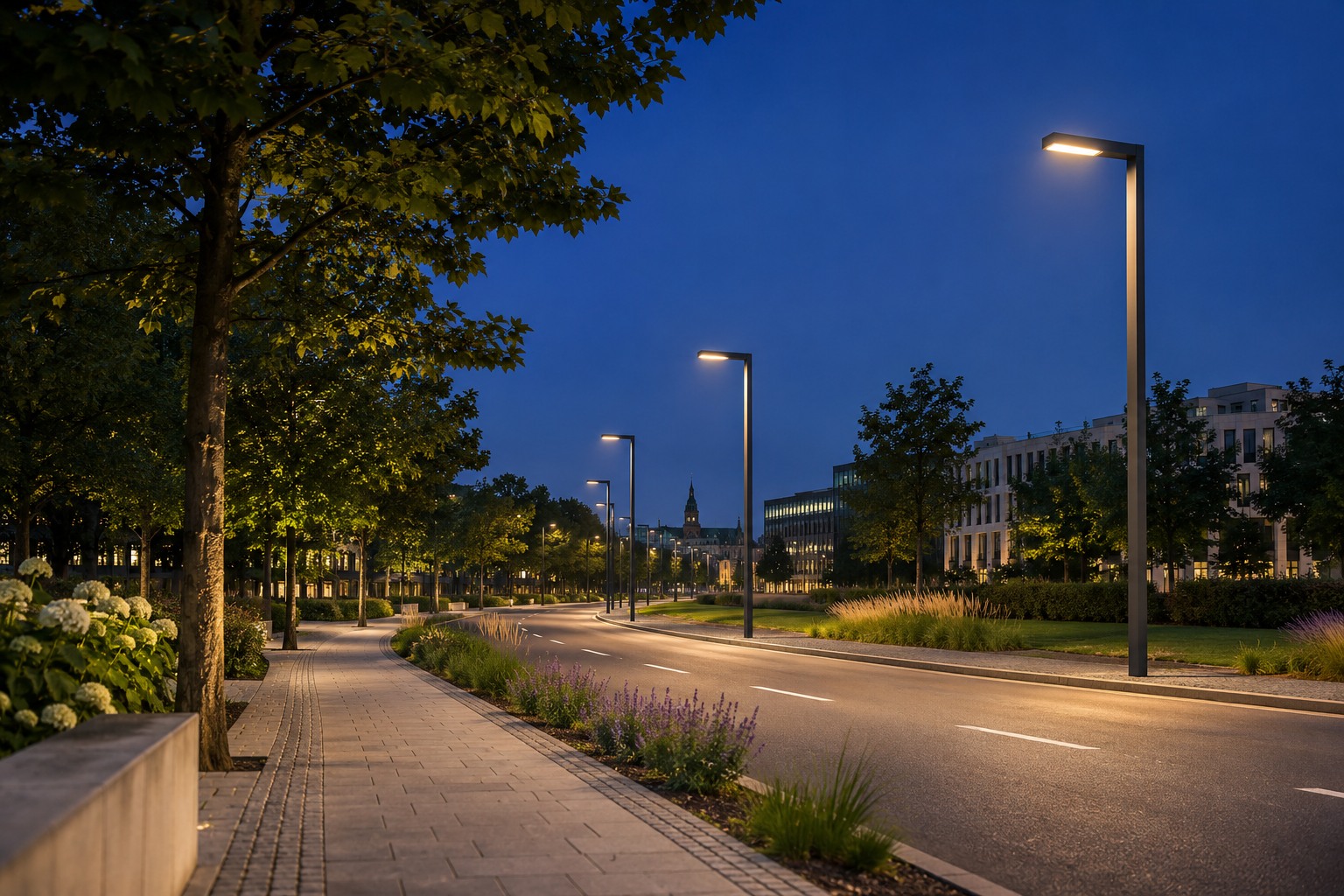
The right distribution for the actual application.
Lighting levels that follow operating needs.
Components that support long-term maintenance.
For municipalities, contractors and distributors, smart outdoor LED lighting is not simply a street light with a sensor. It is a project system: the right photometric distribution puts light on the road or path, a controllable driver changes output when demand changes, and a serviceable luminaire keeps the installation maintainable over its life. The purchasing decision should therefore compare delivered lighting performance, control compatibility, environmental protection and after-sales access - not wattage alone.
This matters because outdoor networks are often operated at full output even when traffic, pedestrian activity or site use is low. The U.S. Department of Energy (DOE) notes that adaptive LED lighting can use maintained lighting levels and dimming to reduce energy consumption by more than 50% in suitable applications. Actual savings depend on the baseline, hours of operation, dimming profile, local tariff and site requirements; they are not a universal product claim [1].
Why B2B buyers are moving from fixtures to controllable systems
A conventional tender can make the initial price easy to compare, but it can hide operating risk. A better specification asks: Can the fixture be commissioned with the chosen controller? Is the driver replaceable? Can the installation team verify each point? Is the optic appropriate for the mounting height and road geometry? Can the owner retrieve fault information before a night patrol is needed? DOE guidance describes networked outdoor controls as a route to lower energy and maintenance costs, while supporting multi-vendor procurement when requirements are clearly defined [2].
| Project question | Why it affects lifecycle cost | What to request in a B2B quotation |
|---|---|---|
| Light on the target area | Optics and aiming determine useful light, glare and spill. | IES distribution, mounting height, spacing proposal and photometric file. |
| Output when demand drops | Dimming avoids paying for unnecessary full-output hours. | Dimming interface, control schedule and controller compatibility. |
| Fault response | Remote alerts and accessible components shorten troubleshooting. | Driver access method, spare-parts policy and warranty process. |
| Outdoor durability | Water, dust, corrosion, vibration and surge events drive failures. | IP/IK rating, SPD specification, coating and test documentation. |
| Future interoperability | A locked control stack can complicate expansion or replacement. | NEMA/Zhaga option, commissioning steps and protocol statement. |
A practical control strategy for roads, parks and industrial sites
Start with lighting needs, then add controls. Establish the required illuminance, uniformity, glare limits and operating hours for each zone. Next, separate predictable low-demand periods from activity-triggered periods. A time schedule can reduce output late at night; a motion or traffic input can temporarily raise a local group. Finally, record the commissioning settings so operations teams can evaluate alarms, energy and maintenance from the same baseline.
The chart below is a planning illustration, not a savings promise. It shows why an LED retrofit should be evaluated together with a verified dimming strategy. DOE research reports that LED optics and controls can enable large reductions in generated light while maintaining the intended function, but the final design must be checked against the application and local standards [3].
When output follows demand
Illustrative annual energy index · legacy baseline = 100
fixed-output
fixed-output
dimming
controls
Specify responsible light, not merely brighter light
Good outdoor lighting is useful, targeted, appropriately limited and controlled. DarkSky and the Illuminating Engineering Society recommend aiming and shielding light only where it is needed, using the lowest practical light level, and applying timers or motion controls where possible [4]. In a procurement document, this becomes a measurable request: choose a distribution for the road or path, review high-angle output, define the dimming range, and verify the installed aiming. This approach supports visual comfort while limiting light trespass and wasted upward light.
Put light where it is needed. Adjust it when demand changes.
Design takeaway · informed by the DarkSky / IES principles [4]
Where Alite Lighting fits in a project specification
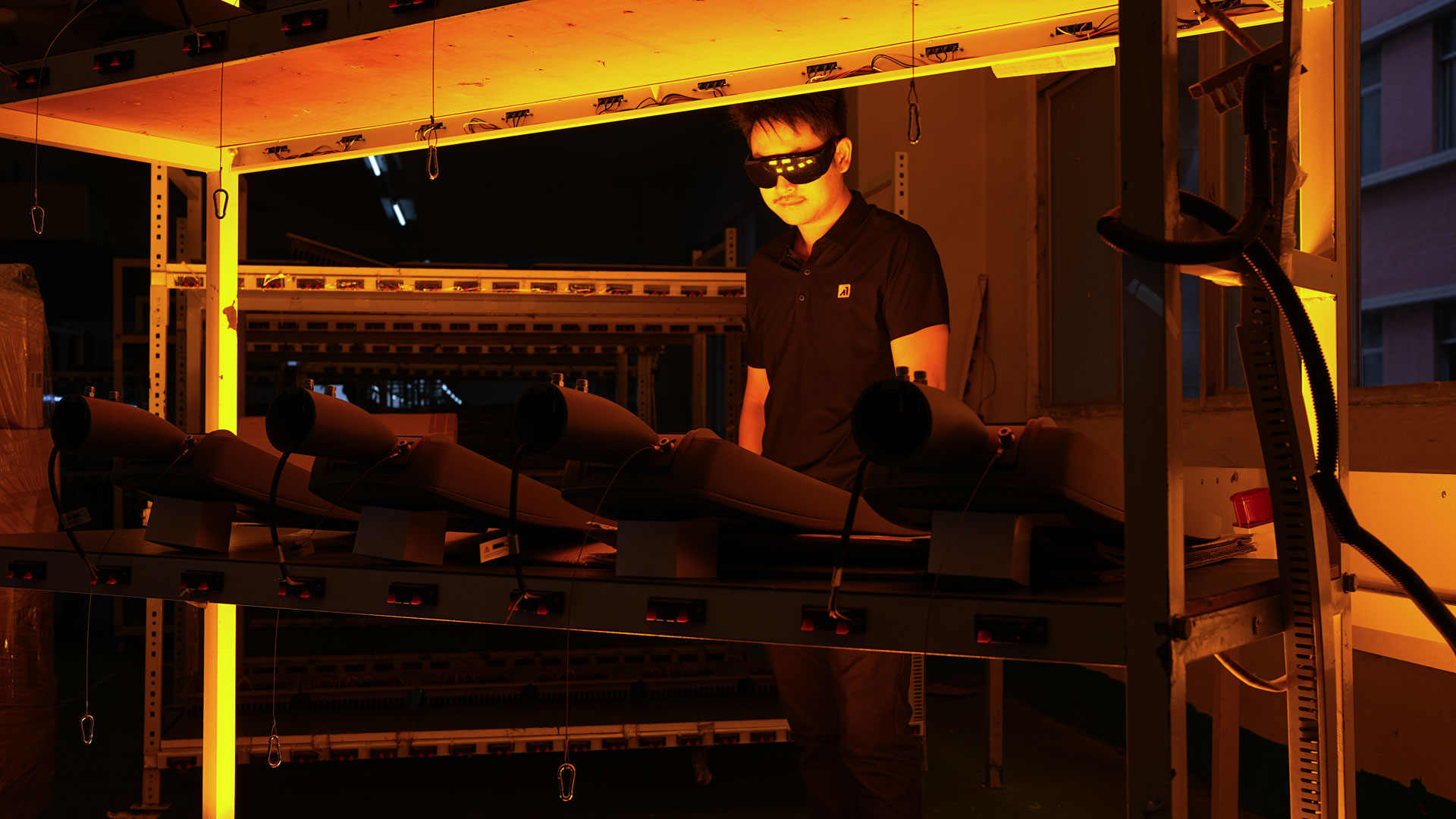
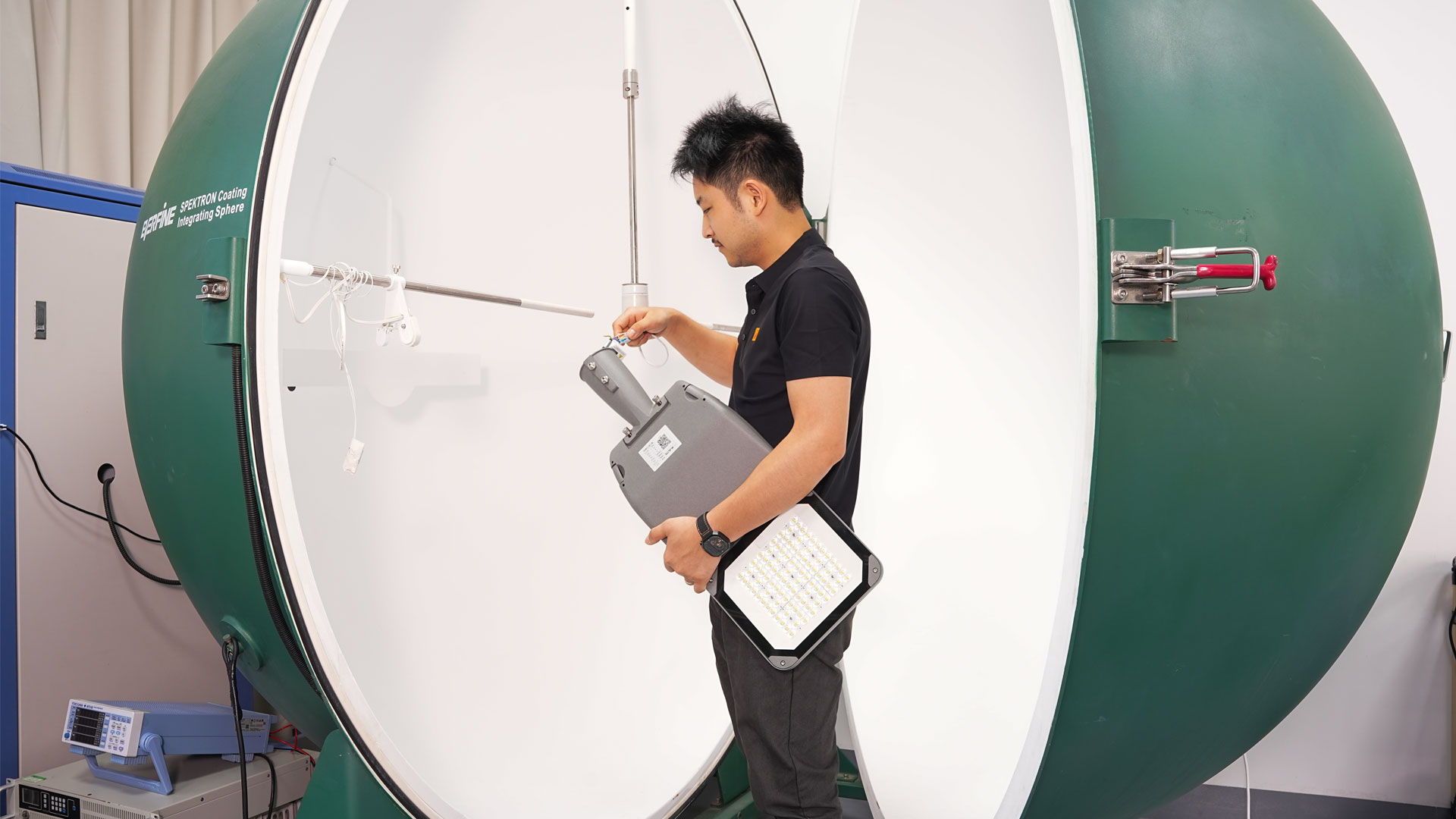
Alite Lighting serves B2B outdoor-lighting projects from its sales and operations team in Taizhou and its supply-chain and quality-control support in Zhongshan. For road projects, the ASL23 LED street light can be specified around the project’s efficacy, IP66, impact-resistance, surge-protection, distribution and control requirements. For installations that need future control readiness, the ASE02 platform can be configured with provision for NEMA-based lighting control. Final configuration should always be confirmed against the project drawing, local compliance requirements and requested component brands.
For buyers, the useful next step is a quotation package rather than a standalone price: product datasheet, IES/LDT photometry, wiring and installation guidance, a control compatibility statement, test and certificate documents applicable to the target market, packing details, lead time and spare-parts recommendation. This makes evaluation easier for the consultant, contractor and asset owner at the same time.
| Application | Recommended control approach | Specification focus |
|---|---|---|
| Urban or collector road | Time-of-night dimming with optional remote monitoring | Road distribution, glare control, NEMA readiness, SPD and service access |
| Park or pedestrian route | Scheduled low level plus motion-based uplift where suitable | Warm CCT decision, shielding, uniformity and vandal resistance |
| Industrial yard | Zone schedules and fault monitoring | Mounting height, asymmetrical optics, IP/IK, corrosion environment |
| Sports or large area | Scene-based programmed output | Beam selection, aiming, instant switching and electrical capacity |
Buyer checklist before issuing a purchase order
- Confirm the lighting calculation uses the actual mounting height, pole spacing, road width and surface assumptions.
- Request the luminaire-level test data and identify which documents apply to the exact quoted configuration.
- Define the dimming schedule, control node and commissioning responsibility before production.
- Check environmental requirements: ingress protection, mechanical impact, surge exposure, coastal corrosion and ambient temperature.
- Agree on spare driver/controller quantities, warranty response and the handover documents needed by the operator.
Frequently asked questions
Can smart street lighting reduce energy use?
Yes, when the light level is designed around real operating conditions. LED conversion, scheduled dimming and adaptive control address different parts of the energy equation. Savings must be modeled and verified for the individual site; the baseline and operating profile matter as much as fixture efficiency.
Do all outdoor LED lights need a networked control system?
No. A smaller project may use a photocell or timed dimming driver. Networked controls are most valuable where the owner benefits from remote monitoring, asset-level fault information, flexible schedules or a large installed base.
What should a distributor ask an outdoor-lighting factory?
Ask for application photometry, the exact driver and surge-protection configuration, IP/IK evidence, control interface options, certification scope, packing information, warranty terms and a clear lead-time commitment. These details prevent mismatched assumptions between the quotation and the delivered project.
References & further reading
Official resources cited in this article.
- [1]U.S. Department of Energy. Adaptive Lighting for Streets and Residential Areas.
- [2]U.S. Department of Energy. Model Specification for Networked Outdoor Lighting Control Systems, updated November 5, 2026.
- [3]U.S. Department of Energy. Roadway Lighting Research.
- [4]DarkSky International. Five Principles for Responsible Outdoor Lighting, updated September 30, 2026.
- [5]U.S. Department of Energy. Purchasing Energy-Efficient Exterior Lighting.