العربية
 Español
 Pусский
 lingua italiana
 Français
 Deutsch
 Portugues



LED street lights have gained popularity due to their energy efficiency, long lifespan, and environmental friendliness. They have become the preferred choice for municipalities and organizations looking to improve outdoor lighting while reducing energy consumption and maintenance costs.
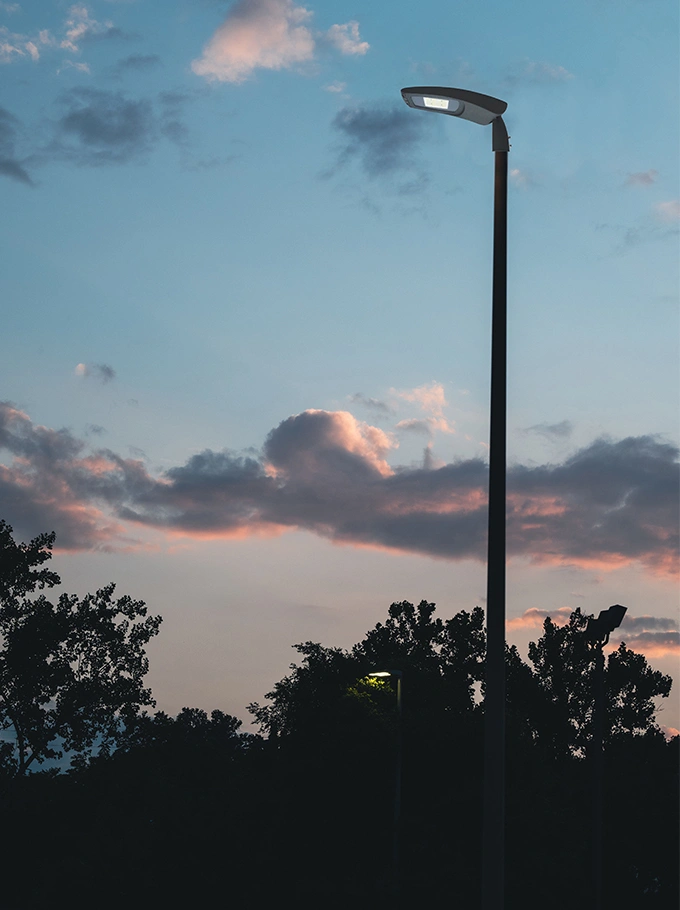
How to Choose a LED Street Light?
In recent years, LED street lights have gained popularity due to their energy efficiency, long lifespan, and environmental friendliness. They have become the preferred choice for municipalities and organizations looking to improve outdoor lighting while reducing energy consumption and maintenance costs. However, with a wide range of options available in the market, it can be challenging to choose the right LED street light for your specific needs. In this passage, we will discuss the key factors to consider when selecting a LED street light.
1.Lumens and Light Output: One of the most important factors to consider is the light output of the LED street light, which is measured in lumens. Lumens indicate the total amount of visible light emitted by the light source. Assess the lighting requirements of the area where the street light will be installed and choose a LED light with an appropriate lumen output to ensure sufficient illumination.
2.Wattage and Energy Efficiency: LED street lights are known for their energy efficiency compared to traditional lighting technologies. When selecting a LED street light, consider its wattage. Lower wattage LED lights consume less energy while providing the same or better lighting performance. Look for high-efficiency LED lights that offer substantial energy savings without compromising on brightness.
3.Color Temperature and CRI: The color temperature of a LED street light determines the appearance of the light emitted. It is measured in Kelvin (K). Different color temperatures create different atmospheres and have varying impacts on visibility. For street lighting, a color temperature between 4000K and 5000K is generally recommended. Additionally, consider the Color Rendering Index (CRI) of the LED light, which indicates how accurately the light source renders colors compared to natural light. Higher CRI values indicate better color rendering.
4.Optics and Light Distribution: Optics play a crucial role in directing the light from the LED street light to the desired area. Consider the type of optics used in the street light and its light distribution pattern. Wide distribution patterns are suitable for illuminating large areas, while narrow or asymmetric patterns are ideal for focused lighting in specific directions. Optics help minimize light pollution and ensure maximum efficiency by directing light where it is needed most.
5.Durability and Lifespan: LED street lights are designed to be long-lasting, but their durability and lifespan can vary. Look for street lights with high-quality materials, such as corrosion-resistant casings and tempered glass, which can withstand harsh weather conditions. Additionally, check the manufacturer's specifications for the estimated lifespan of the LED street light. Longer lifespan means fewer maintenance requirements and cost savings in the long run.
6.Smart Lighting Features: Many LED street lights now come equipped with smart lighting features that offer enhanced control and energy management capabilities. These features can include dimming options, motion sensors, and remote monitoring systems. Consider whether these features align with your specific requirements and if they can contribute to further energy savings and operational efficiency.
7.Compliance and Certifications: Ensure that the LED street light you choose complies with relevant industry standards and certifications. Look for certifications such as DLC (DesignLights Consortium), Energy Star, and RoHS (Restriction of Hazardous Substances) to ensure the product meets safety, performance, and environmental requirements.
8.Warranty and Support: Finally, consider the warranty and after-sales support provided by the manufacturer. A comprehensive warranty demonstrates the manufacturer's confidence in the product's quality and reliability. Additionally, reliable customer support can be crucial in case of any issues or questions that may arise during the installation or operation of the LED street lights.
By considering these key factors, you can make an informed decision when choosing a LED street light that meets your lighting requirements, energy efficiency goals, and budget. LED street lights offer numerous benefits, and selecting the right one will ensure optimal lighting performance, reduced energy consumption, and a positive impact on the environment.
Recommended LED street light: //www.alitecn.com/products/M-Alite-ASL02-led-street-light.html
ASL02 Street light SERIES offers the best LED road lighting solution to our clints for both pedestrian and vehicle road applications specially for Smart City Street Lighting . It offers 3 different housing sizes withs IP65, IK08 and a wide range of beam optics to globally cater to different road design and conditions. It has designed to achieve better light uniformity distribution and maximum spacing between poles, while ensuring perfect light on the road. IP65, IK08. And this modal is compatible with built-in light sensors, installation of NEMA bases and Zhaga bases, and fit with all external controllers, motion sensors, and external light sensors.
| Product Model | Wattage | Input voltage |
Luminous Efficacy
|
RA | Color Temperature | Beam Angle | Power Factor | IP Grade | IK Grade |
Material Of Shell
|
Material Of Lens
|
Dimension(mm) |
| ASL02-A | 30W|40W|50W|60W | AC85-265V | >130LM/W | >70|80|90 | 2400K|2700K|3000K|4000K|5000K |
Type I | Type II | Type III
|
>0.95
|
IP66
|
IK09
|
Aluminum (ADC12) +Optical Glass
|
PMMA | PC
|
690*290*165
|
| ASL02-B | 80W|100W | AC85-265V | >130LM/W | >70|80|90 | 2400K|2700K|3000K|4000K|5000K | Type I | Type II | Type III | >0.95 | IP66 | IK09 | Aluminum (ADC12) +Optical Glass | PMMA | PC |
790*340*165
|
| ASL02-C | 120W|150W180W|200W | AC85-265V | >130LM/W | >70|80|90 | 2400K|2700K|3000K|4000K|5000K | Type I | Type II | Type III | >0.95 | IP66 | IK09 | Aluminum (ADC12) +Optical Glass | PMMA | PC |
970*410*195
|