العربية
 Español
 Pусский
 lingua italiana
 Français
 Deutsch
 Portugues



LED street light lamps are designed and manufactured to comply with industry standards and regulations for lighting performance and safety. Here\'s how LED street light lamps typically adhere to industry standards and regulations:
How do LED street light lamps comply with industry standards and regulations for lighting performance and safety?
LED street light lamps are designed and manufactured to comply with industry standards and regulations for lighting performance and safety. Compliance with these standards ensures that LED street lights meet minimum requirements for efficiency, quality, reliability, and safety. Here's how LED street light lamps typically adhere to industry standards and regulations:
1. Energy Efficiency Standards:
LED street light lamps must meet energy efficiency standards set by regulatory agencies and organizations such as the Energy Star program, the International Energy Agency (IEA), and regional energy efficiency directives. These standards establish minimum efficiency requirements for LED luminaires, ensuring that they consume less energy while providing equivalent or better lighting performance compared to traditional lighting technologies. LED street light lamps are tested and certified to verify compliance with energy efficiency standards, enabling consumers to make informed purchasing decisions based on energy savings potential.
2. Lighting Performance Standards:
LED street light lamps are subject to lighting performance standards established by organizations such as the Illuminating Engineering Society of North America (IESNA) and the International Commission on Illumination (CIE). These standards define parameters such as luminous flux, color rendering index (CRI), correlated color temperature (CCT), and light distribution characteristics, ensuring that LED luminaires deliver consistent and uniform illumination that meets the needs of various outdoor lighting applications. Compliance with lighting performance standards helps ensure that LED street lights provide adequate visibility, comfort, and safety for pedestrians, motorists, and cyclists.
3. Safety Regulations:
LED street light lamps must comply with safety regulations and requirements established by regulatory agencies such as the International Electrotechnical Commission (IEC), Underwriters Laboratories (UL), and regional safety standards organizations. These regulations address aspects such as electrical safety, fire safety, mechanical safety, and environmental safety to ensure that LED luminaires are safe for use in outdoor environments. LED street light lamps undergo rigorous testing and certification to verify compliance with safety regulations, mitigating risks of electrical hazards, fire incidents, and other safety concerns.
4. Environmental Regulations:
LED street light lamps are subject to environmental regulations and directives aimed at reducing the environmental impact of lighting products. These regulations may include restrictions on hazardous substances such as lead, mercury, and cadmium, as well as requirements for recycling and disposal of lighting fixtures at the end of their life cycle. LED street light lamps are designed and manufactured to comply with environmental regulations such as the Restriction of Hazardous Substances (RoHS) directive and the Waste Electrical and Electronic Equipment (WEEE) directive, minimizing environmental pollution and promoting sustainability.
5. Quality Assurance:
LED street light lamps undergo comprehensive quality assurance measures to ensure consistent performance, reliability, and durability. Quality management systems such as ISO 9001 certification are commonly implemented by manufacturers to demonstrate compliance with international quality standards and best practices. LED street light lamps are subjected to rigorous testing and inspection throughout the manufacturing process to verify compliance with performance specifications, safety requirements, and regulatory standards, ensuring that they meet or exceed customer expectations for quality and reliability.
By adhering to industry standards and regulations for lighting performance and safety, LED street light lamps provide efficient, high-quality, and safe illumination for outdoor environments, contributing to energy savings, improved visibility, and enhanced safety for communities around the world.
What certifications and testing procedures ensure the reliability and efficacy of LED lamps?
Several certifications and testing procedures ensure the reliability and efficacy of LED lamps, validating their performance, safety, and compliance with industry standards. Here are some of the most common certifications and testing procedures for LED lamps:
1. Energy Star Certification:
Energy Star certification is awarded to LED lamps that meet stringent energy efficiency criteria established by the U.S. Environmental Protection Agency (EPA) and the U.S. Department of Energy (DOE). LED lamps bearing the Energy Star label are tested and verified to meet specific performance requirements for energy efficiency, light output, color quality, and longevity. Energy Star certification helps consumers identify energy-efficient LED lamps that offer superior performance and savings on energy bills.
2. DLC (DesignLights Consortium) Qualified Products List:
The DLC Qualified Products List (QPL) is a certification program that evaluates LED lamps based on performance, quality, and energy efficiency criteria established by the DesignLights Consortium, a non-profit organization promoting energy-efficient lighting solutions. LED lamps listed on the DLC QPL meet or exceed industry standards for efficacy, light output, color quality, and reliability. DLC certification is often required for eligibility in utility rebate programs and government procurement initiatives.
3. UL (Underwriters Laboratories) Certification:
UL certification is a safety certification provided by Underwriters Laboratories, an independent testing organization. LED lamps undergo rigorous testing and evaluation to ensure compliance with safety standards and regulations for electrical safety, fire safety, mechanical safety, and environmental safety. UL certification indicates that LED lamps meet industry-recognized safety requirements and can be safely installed and used in various applications.
4. LM-79 Testing:
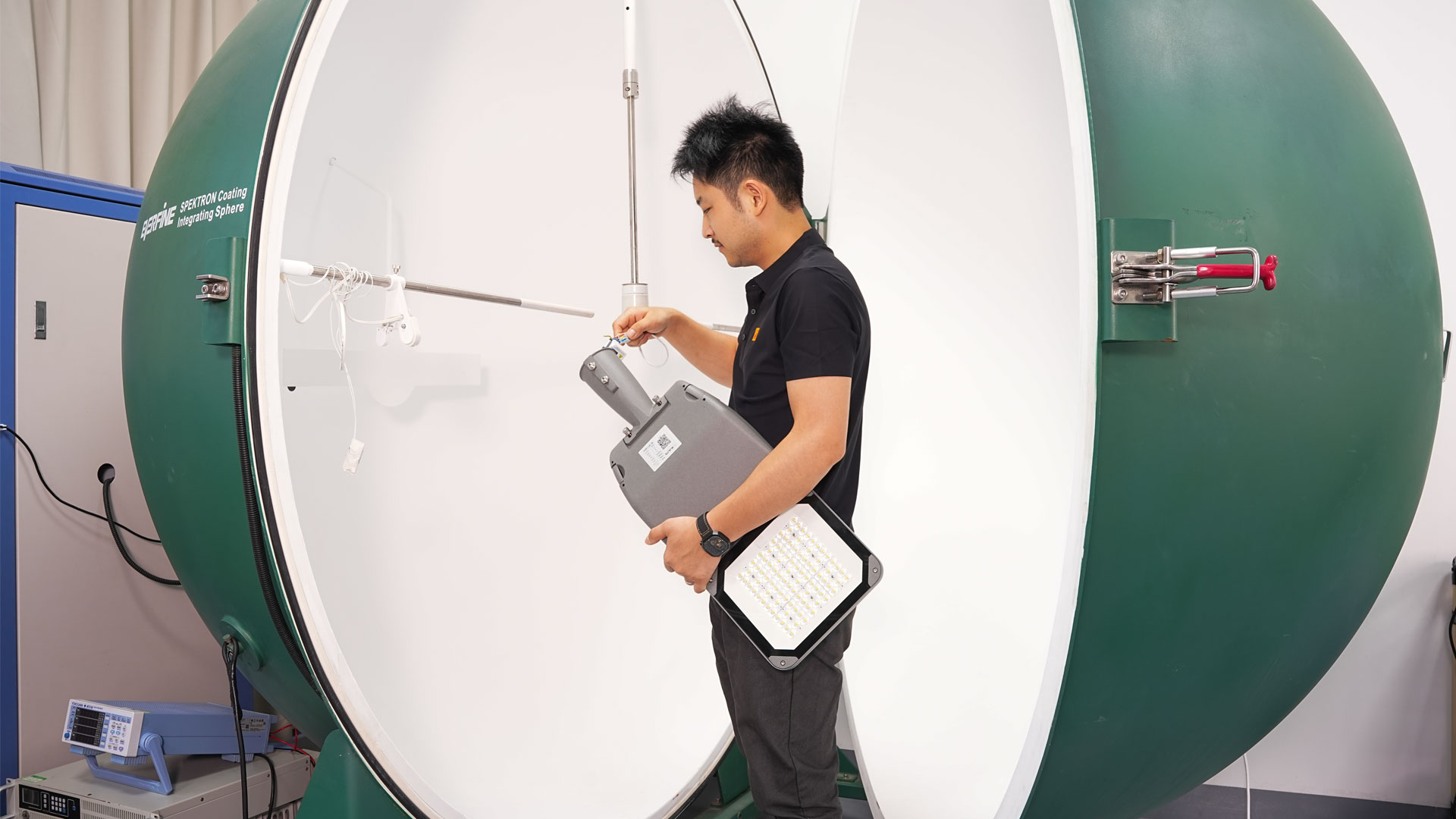
LM-79 testing is a standardized test procedure developed by the Illuminating Engineering Society of North America (IESNA) to measure and evaluate the photometric and electrical performance of LED lamps. LM-79 testing includes measurements of total luminous flux, efficacy, color characteristics (CCT and CRI), light distribution, and electrical characteristics (voltage, current, power factor). LED lamps undergo LM-79 testing to assess their performance and ensure compliance with industry standards for lighting quality and efficiency.
5. LM-80 Testing:
LM-80 testing is another standardized test procedure developed by the IESNA to evaluate the long-term performance and reliability of LED lamps. LM-80 testing involves accelerated life testing of LED chips to assess lumen maintenance (L70) and chromaticity shift over time under controlled temperature conditions. LM-80 test results provide valuable data on the expected lifespan and performance degradation of LED lamps, helping manufacturers and specifiers make informed decisions about product selection and reliability.
6. ISTMT (In Situ Temperature Measurement Test):
ISTMT is a testing procedure that measures the temperature of LED lamps in real-world operating conditions to assess thermal management performance and reliability. ISTMT testing helps identify potential issues related to heat dissipation, thermal runaway, and component degradation, allowing manufacturers to optimize design and thermal management strategies to ensure long-term reliability and performance stability.
7. Ingress Protection (IP) Rating Testing:
IP rating testing evaluates the degree of protection provided by LED lamps against intrusion of solid particles (e.g., dust) and moisture ingress. LED lamps undergo IP rating testing according to international standards such as IEC 60529 to determine their resistance to environmental conditions and suitability for use in indoor or outdoor applications. IP rating testing helps ensure that LED lamps are adequately sealed and protected against environmental hazards, ensuring long-term reliability and durability.
By undergoing these certifications and testing procedures, LED lamps are thoroughly evaluated for their energy efficiency, performance, safety, and reliability, providing assurance to consumers, specifiers, and end-users that they meet industry standards and deliver superior quality and efficacy.