العربية
 Español
 Pусский
 lingua italiana
 Français
 Deutsch
 Portugues



Expert guide to LED driver thermal management for desert and tropical climates. Discover heat dissipation technologies that prevent failure in 50°C+ ambient temperatures.
LED driver failure accounts for 60-70% of all outdoor lighting system breakdowns in high-temperature regions. The Middle East, North Africa, Southwest United States, and parts of Australia present operating conditions that exceed the design parameters of standard LED drivers. Ambient temperatures routinely reach 45-55°C, and direct solar radiation can push internal driver temperatures beyond 85°C.
This isn't a theoretical concern. Municipal contracts in Dubai, Qatar, and Saudi Arabia include penalty clauses for premature failures. Distributors serving these markets need products engineered specifically for thermal extremes, not generic solutions with optimistic temperature ratings.
The Physics of Driver Failure
Electronic components degrade exponentially as temperature rises. Electrolytic capacitors, which smooth DC output in most LED drivers, lose operational life by roughly 50% for every 10°C increase above their rated temperature. A capacitor rated for 105°C with a 50,000-hour lifespan at that temperature might fail in under 10,000 hours when operating at 115°C.
The problem compounds in enclosed fixtures. Street lights, high-bay industrial fixtures, and wall-mounted area lights trap heat around the driver. Without adequate thermal pathways, the driver becomes a self-heating failure point regardless of LED chip temperature.
Cheaper drivers use minimal heatsinking and rely on convection in moderate climates. These units hit thermal shutdown within hours in desert installations, cycling on and off as internal protection circuits engage. Even when they continue operating, sustained high temperatures accelerate component degradation until complete failure occurs.
Passive Cooling Technologies
Aluminum die-cast housings remain the most reliable passive solution for extreme environments. The thermal conductivity of aluminum (approximately 205 W/m·K) efficiently transfers heat from electronic components to the exterior surface where ambient air circulation provides cooling.
Thermal Performance Comparison of Common Driver Housing Materials:
| Material | Thermal Conductivity | Weight (100W driver) | Cost Factor | Typical Lifespan at 50°C Ambient |
|---|---|---|---|---|
| Aluminum Die-Cast | 205 W/m·K | 580g | 1.0x | 60,000+ hours |
| Extruded Aluminum | 180 W/m·K | 520g | 0.85x | 55,000 hours |
| Polymer Composite | 3-8 W/m·K | 340g | 0.65x | 25,000 hours |
| Steel Stamped | 50 W/m·K | 740g | 0.75x | 35,000 hours |
The performance gap is substantial. Polymer housings marketed as "thermal plastic" simply cannot compete with metal for heat dissipation. Their lower cost creates a false economy when factoring in replacement expenses and labor for desert installations.
Fin design matters more than total surface area. Vertical fins aligned with natural convection currents outperform horizontal configurations. Fin spacing between 8-12mm optimizes airflow without creating dead zones where heat accumulates. Computer thermal modeling shows that properly designed fins can reduce junction temperature by 15-20°C compared to smooth housings with equivalent external dimensions.
Active Thermal Management
Fan-cooled drivers introduce mechanical components that require maintenance but deliver superior cooling capacity. Brushless DC fans rated for continuous operation at high temperatures extend driver lifespan in the most extreme conditions. The key is selecting fans designed for the environment—IP66-rated units with sealed bearings that tolerate dust and temperature extremes.
The reliability concern is legitimate. Fans do eventually fail. However, a quality fan might operate for 70,000 hours at 60°C ambient temperature. When the fan fails, the driver can often continue operating at reduced output until scheduled maintenance, whereas a passively cooled driver simply dies when thermal limits are exceeded.
Heat pipe integration represents an emerging middle ground. These sealed tubes contain fluid that vaporizes at the hot end and condenses at the cool end, transferring heat without moving parts. Heat pipes can relocate thermal energy from densely packed electronics to external heatsinks where dissipation is more effective. The technology adds cost but eliminates the maintenance concerns of active cooling while achieving heat transfer rates that passive systems cannot match.
Component Selection for Thermal Resilience
Film capacitors replace electrolytic capacitors in the highest-spec drivers. They tolerate higher operating temperatures without the dramatic lifespan degradation that plagues electrolytics. A film capacitor maintains stable performance at 125°C internal temperature where an electrolytic would be approaching end-of-life.
The tradeoff is size and cost. Film capacitors require 3-4 times the volume for equivalent capacitance. In a 100W driver, this might increase the housing footprint by 30%. For desert installations where the alternative is systematic failure, the compromise is acceptable.
Wide-bandgap semiconductors using gallium nitride (GaN) or silicon carbide (SiC) operate efficiently at junction temperatures exceeding 200°C. These components generate less waste heat during switching operations compared to traditional silicon MOSFETs. A GaN-based driver might run 8-12°C cooler internally while delivering identical output, providing crucial thermal headroom in extreme environments.
Real-World Performance Testing
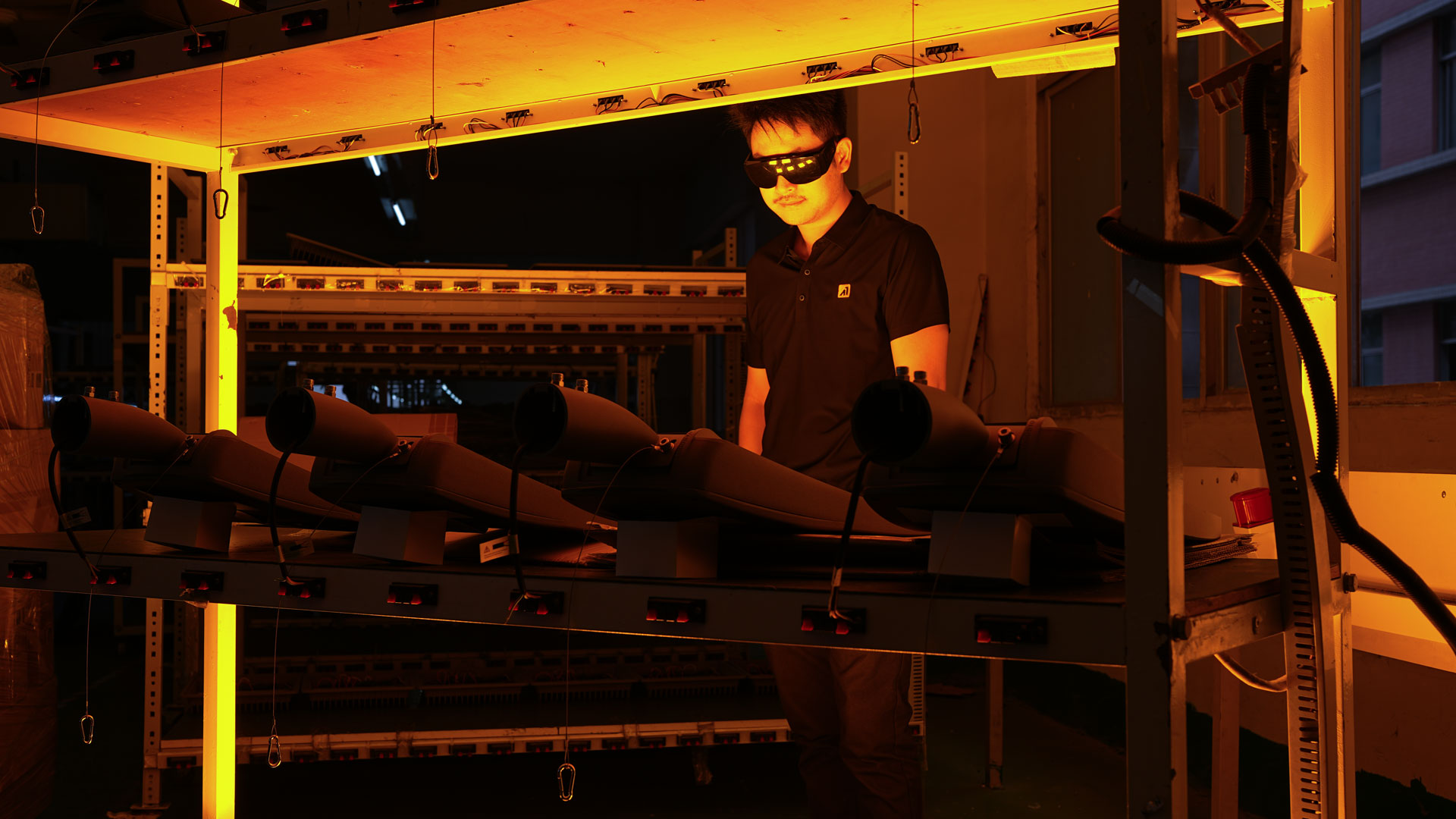
Accelerated life testing reveals which designs survive and which fail. Reputable manufacturers subject drivers to 85°C ambient testing for 3,000+ hours, monitoring lumen maintenance and electrical parameters. This simulates roughly 20,000 hours of operation in typical high-temperature field conditions.
However, ambient testing alone misses thermal cycling stress. Desert environments swing from 50°C daytime to 20°C overnight. This expansion and contraction cycle stresses solder joints and component leads. Thermal shock testing cycles drivers between -20°C and 85°C to identify weaknesses that steady-state testing misses.
Request actual test reports, not just specification sheets claiming temperature ratings. The report should detail test duration, sample size, and failure criteria. Generic statements like "tested to 85°C" without supporting data are essentially meaningless.
Installation Considerations
Even the best driver fails if installed incorrectly. Mounting orientation affects heat dissipation significantly. Drivers designed with vertical heat fins must be installed vertically. Horizontal installation blocks natural convection and can reduce cooling effectiveness by 40%.
Electrical compartment ventilation in complete fixtures requires design attention. Sealed compartments that protect against water ingress also trap heat. Quality street lights and high-bays include ventilation paths—typically labyrinth designs that allow air circulation while maintaining IP66 or IP67 ratings. These pathways should be verified during inspection, not assumed to exist.
Overcurrent operation devastates thermal performance. A driver rated for 100W that continuously operates at 110W due to incorrect LED configuration or voltage fluctuations generates substantially more waste heat. The temperature rise isn't proportional—it's exponential as internal components approach their thermal limits. Proper commissioning includes verification that operating current matches design specifications.
Economic Reality of Quality
High-temperature drivers cost 40-60% more than standard units. A typical 100W street light driver might be $28 for a basic version versus $45 for a properly engineered high-temperature unit. Over a 500-fixture municipal installation, that's $8,500 in additional upfront cost.
The calculation changes when factoring replacement expenses. Desert environments make maintenance expensive. Bucket truck rental, labor, and new fixtures cost $150-200 per replacement event. If standard drivers fail after 18,000 hours versus 60,000 hours for high-temp units, the lifetime cost heavily favors initial quality investment.
10-Year Total Cost Analysis (500-fixture installation):
| Driver Type | Unit Cost | Initial Investment | Expected Replacements | Replacement Cost | 10-Year Total |
|---|---|---|---|---|---|
| Standard Driver | $28 | $14,000 | 2.5 cycles | $187,500 | $201,500 |
| High-Temp Driver | $45 | $22,500 | 0.5 cycles | $37,500 | $60,000 |
The numbers assume 12-hour daily operation and $150 per replacement service call. Even modest changes to these assumptions maintain the economic advantage of proper thermal engineering.
Specification Requirements
Purchase orders should specify maximum case temperature rise above ambient, not just maximum ambient rating. A driver claiming "85°C ambient operation" might actually reach 105°C case temperature in that environment. Requiring "case temperature not to exceed 75°C at 50°C ambient" forces manufacturers to demonstrate actual thermal performance.
Demand thermal imaging reports from sample installations. These images reveal hot spots and verify that thermal design functions as claimed. A driver that measures 95°C on thermal imaging in 45°C ambient has inadequate heat dissipation regardless of what the specification sheet promises.
Desert installations require thermal engineering, not optimistic assumptions. The suppliers who understand this deliver products that survive, while those chasing lowest initial cost leave buyers with systematic failures and expensive remediation projects.
Specifying outdoor LED fixtures for high-temperature environments? Our thermal engineering team provides customized driver selection guidance and accelerated testing data for projects in extreme climate zones.