العربية
 Español
 Pусский
 lingua italiana
 Français
 Deutsch
 Portugues



Expert engineering guide to heat-resistant LED lighting for desert and high-temperature regions. Learn thermal management, IP ratings, material specs, and performance validation standards.
Operating lighting systems in desert and high-temperature regions presents distinct engineering challenges that standard LED fixtures simply cannot withstand. When ambient temperatures regularly exceed 50°C and surface temperatures climb even higher, conventional lighting solutions fail prematurely, leading to costly maintenance cycles and project delays.
Understanding Thermal Challenges in Extreme Environments
Desert regions across the Middle East, North Africa, Australia, and the southwestern United States create hostile conditions for electronic equipment. LED lighting systems face three critical thermal stressors: elevated ambient temperatures, intense solar radiation, and dramatic temperature fluctuations between day and night cycles.
The junction temperature of LED chips directly impacts both luminous efficacy and lifespan. For every 10°C increase beyond optimal operating temperature, LED lifespan can decrease by approximately 30-50%. This relationship makes thermal management the single most important factor in fixture design for high-temperature applications.
Critical Specifications for Desert-Grade LED Fixtures
Thermal Management Architecture
Effective heat dissipation requires engineered solutions beyond basic aluminum housings. High-performance fixtures incorporate several key elements:
Heat sink design must maximize surface area while accounting for dust accumulation that reduces thermal transfer efficiency. Fin spacing typically ranges from 8-12mm to prevent clogging in sandy environments while maintaining adequate air circulation.
Thermal interface materials between LED modules and heat sinks should maintain stability at temperatures exceeding 150°C. Premium silicone-based compounds outperform standard thermal pads in long-term thermal conductivity retention.
Passive cooling systems prove more reliable than active solutions in dusty desert conditions. Convection-optimized geometries eliminate fan failures and reduce ingress points for particulate contamination.
Material Selection for Extreme Durability
| Component | Standard Material | Desert-Grade Material | Performance Advantage |
|---|---|---|---|
| Housing | Die-cast aluminum ADC12 | Marine-grade aluminum 6063-T6 | Superior corrosion resistance, better thermal conductivity |
| Lens | Polycarbonate (PC) | Borosilicate glass or UV-stabilized PMMA | Prevents yellowing and maintains light transmission >95% |
| Gaskets | EPDM rubber | Silicone or fluorosilicone | Temperature resistance up to 200°C, maintains elasticity |
| Driver enclosure | Standard plastic | Thermally conductive polymer or aluminum | Dissipates driver heat, extends component life by 40% |
| Fasteners | Stainless steel 304 | Stainless steel 316 or A4 grade | Prevents seizing in high-temperature, high-salinity environments |
LED Chip Selection and Driver Requirements
Premium LED chips rated for high-temperature operation maintain stable color temperature and luminous output. LM-80 test data should demonstrate less than 10% lumen depreciation after 10,000 hours at 85°C case temperature, equivalent to approximately 50,000 hours at standard 25°C conditions.
Driver electronics require derating for ambient temperatures above 40°C. Quality constant-current drivers specify maximum case temperatures of 80-90°C, but actual installation conditions in desert regions often exceed these parameters. Specifying drivers with at least 20% thermal headroom prevents premature failure.
Wide input voltage ranges (100-305VAC) accommodate unstable power grids common in developing regions, while integrated surge protection (minimum 10kV) guards against lightning-induced voltage spikes prevalent during desert storm seasons.
IP Rating Requirements and Ingress Protection
The IP (Ingress Protection) rating becomes critical in desert applications, but not always in the way engineers expect. While moisture protection seems less relevant in arid climates, fine dust penetration poses the greater threat.
IP65 minimum provides adequate protection for most applications, but IP66 or IP67 ratings offer superior defense against pressure washing during maintenance and occasional flash flooding. The second digit's dust protection proves equally important - a "6" rating ensures complete dust-tight performance essential for optical cavity protection.
Sealing systems must withstand thermal cycling without developing gaps. Premium fixtures use continuous gasket designs with compression-molded corners rather than glued joints that separate under thermal stress.
Testing Standards and Performance Validation
Reputable manufacturers provide documentation proving fixtures meet rigorous testing protocols:
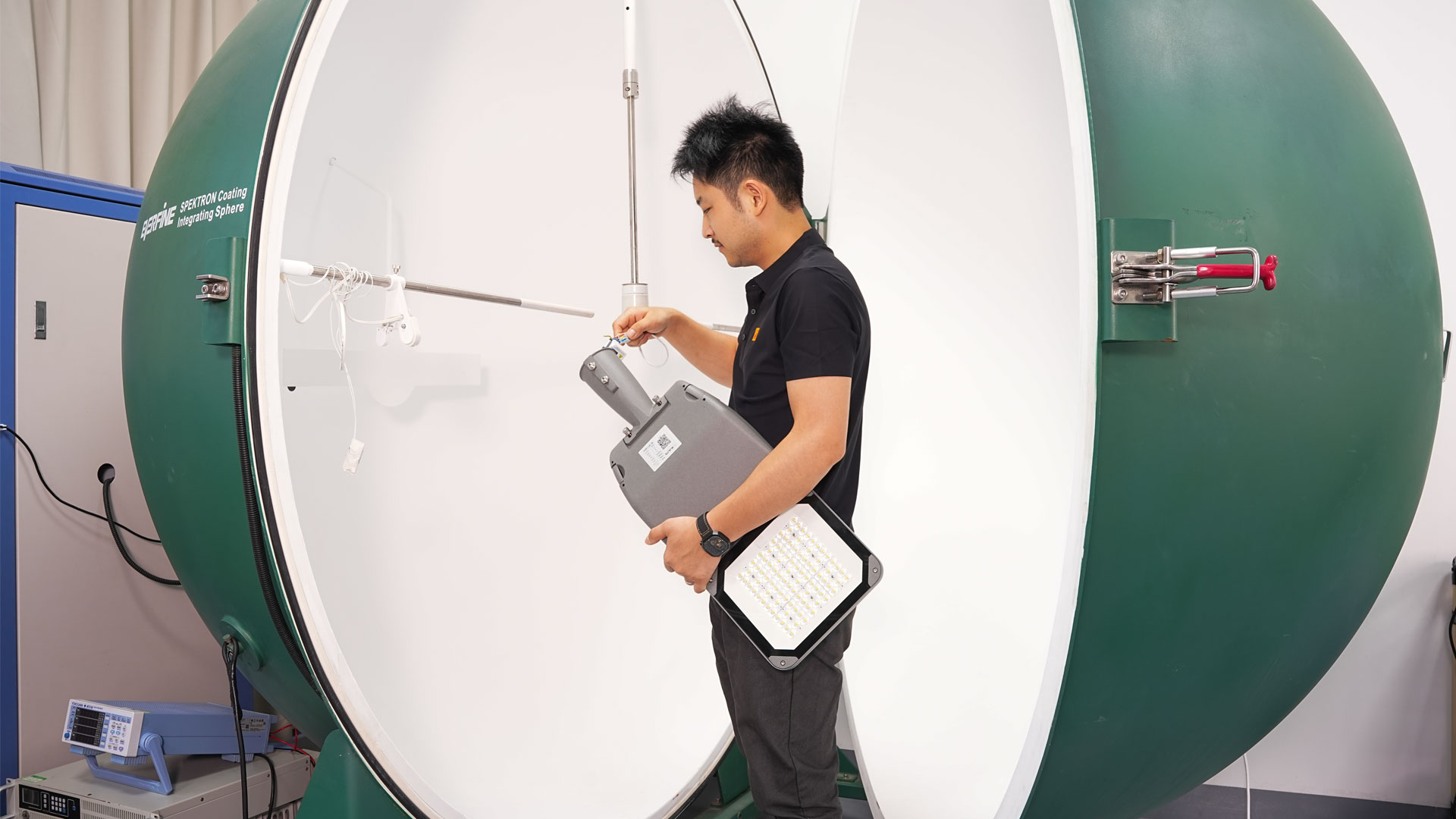
- LM-79 testing validates photometric performance and electrical characteristics
- LM-80 establishes lumen maintenance projections through accelerated aging
- IK ratings (IK08 minimum) confirm mechanical impact resistance
- Salt spray testing per ASTM B117 (500+ hours) demonstrates corrosion resistance
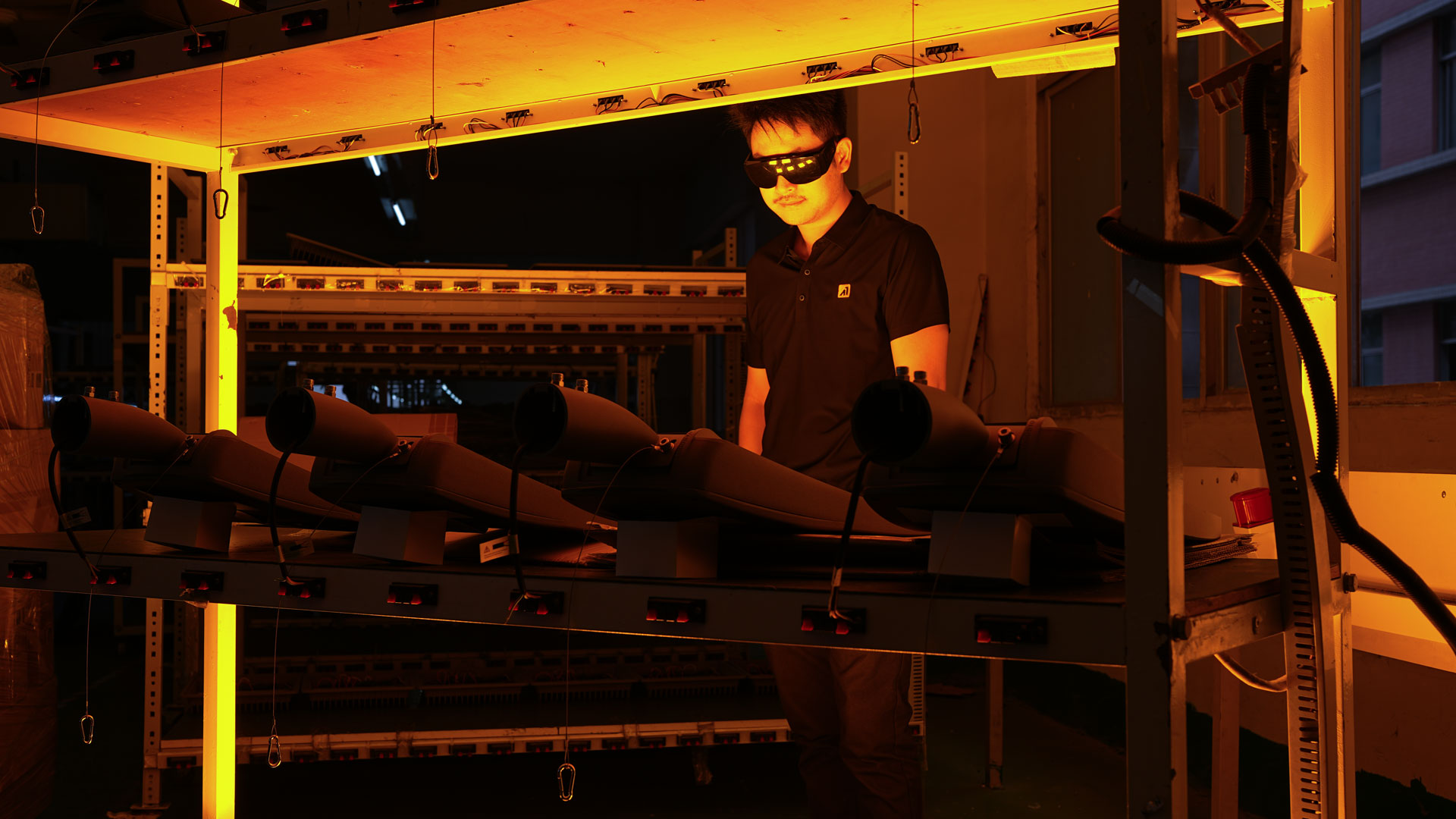
- Thermal cycling tests (-40°C to +70°C) verify seal integrity and material stability
Installation Considerations for Maximum Performance
Even the best-engineered fixtures require proper installation practices. Mounting orientation affects thermal performance - horizontally-mounted fixtures dissipate heat more effectively than vertical installations in still air conditions.
Maintaining adequate spacing between fixtures prevents heat stacking, where multiple units create localized hot zones. Minimum spacing should be 1.5 times the fixture width for high-density installations.
Cable entry points require careful sealing with strain relief that maintains flexibility across temperature ranges. UV-resistant cable glands rated to IP68 prevent sand ingress while accommodating cable thermal expansion.
Long-Term Performance Economics
Initial fixture costs for desert-grade LED lighting typically run 35-60% higher than standard commercial products. However, lifespan extension from 30,000 hours to 80,000+ hours, combined with reduced maintenance visits in remote locations, delivers ROI within 18-24 months for most projects.
Energy efficiency gains compound these savings. Premium thermal management maintains LED efficacy above 140 lm/W throughout the fixture's operational life, while thermally-stressed standard fixtures degrade to below 100 lm/W within three years.
Selecting appropriate LED lighting for extreme temperature environments requires understanding the complete thermal ecosystem, not just individual component specifications. Successful projects combine engineered thermal solutions, validated materials, and installation best practices to deliver reliable illumination throughout the harshest conditions on Earth.