العربية
 Español
 Pусский
 lingua italiana
 Français
 Deutsch
 Portugues



Description: Learn about flicker in lighting systems, its impact on visual comfort, and the standards and test methods used to measure it. Discover how manufacturers mitigate flicker and comply with global regulations to provide flicker-free lighting solutions.
Flicker in Lighting Systems: Standards, Test Methods, and Mitigation Strategies
Introduction: Flicker, defined as rapid and repeated changes in light intensity, can significantly affect the quality of lighting systems. Not only does it influence visual comfort, but flicker has also been linked to a range of physiological and psychological effects, such as eyestrain, headaches, and even migraines. This article explores the phenomenon of flicker, its impact on health, and the standards and test methods designed to quantify and mitigate it in lighting products.
Introduction: Flicker, defined as rapid and repeated changes in light intensity, can significantly affect the quality of lighting systems. Not only does it influence visual comfort, but flicker has also been linked to a range of physiological and psychological effects, such as eyestrain, headaches, and even migraines. This article explores the phenomenon of flicker, its impact on health, and the standards and test methods designed to quantify and mitigate it in lighting products.
What is Flicker in Lighting? Flicker is the fluctuation in light intensity caused by irregularities in the power supply or the lighting system itself. This phenomenon can manifest both visibly and invisibly. Visible flicker is directly perceptible to the human eye, while invisible flicker may not be seen but still cause health issues. The discomfort caused by flicker can lead to eyestrain, headaches, and discomfort, especially in sensitive individuals.
Flicker Standards in Lighting: To ensure flicker is controlled within acceptable limits, various global standards have been established. Prominent organizations such as the International Electrotechnical Commission (IEC), American National Standards Institute (ANSI), Institute of Electrical and Electronics Engineers (IEEE), and Energy Star have set criteria to limit flicker in lighting systems. These standards aim to provide manufacturers with clear guidelines and to ensure that lighting systems are both comfortable and safe for consumers.
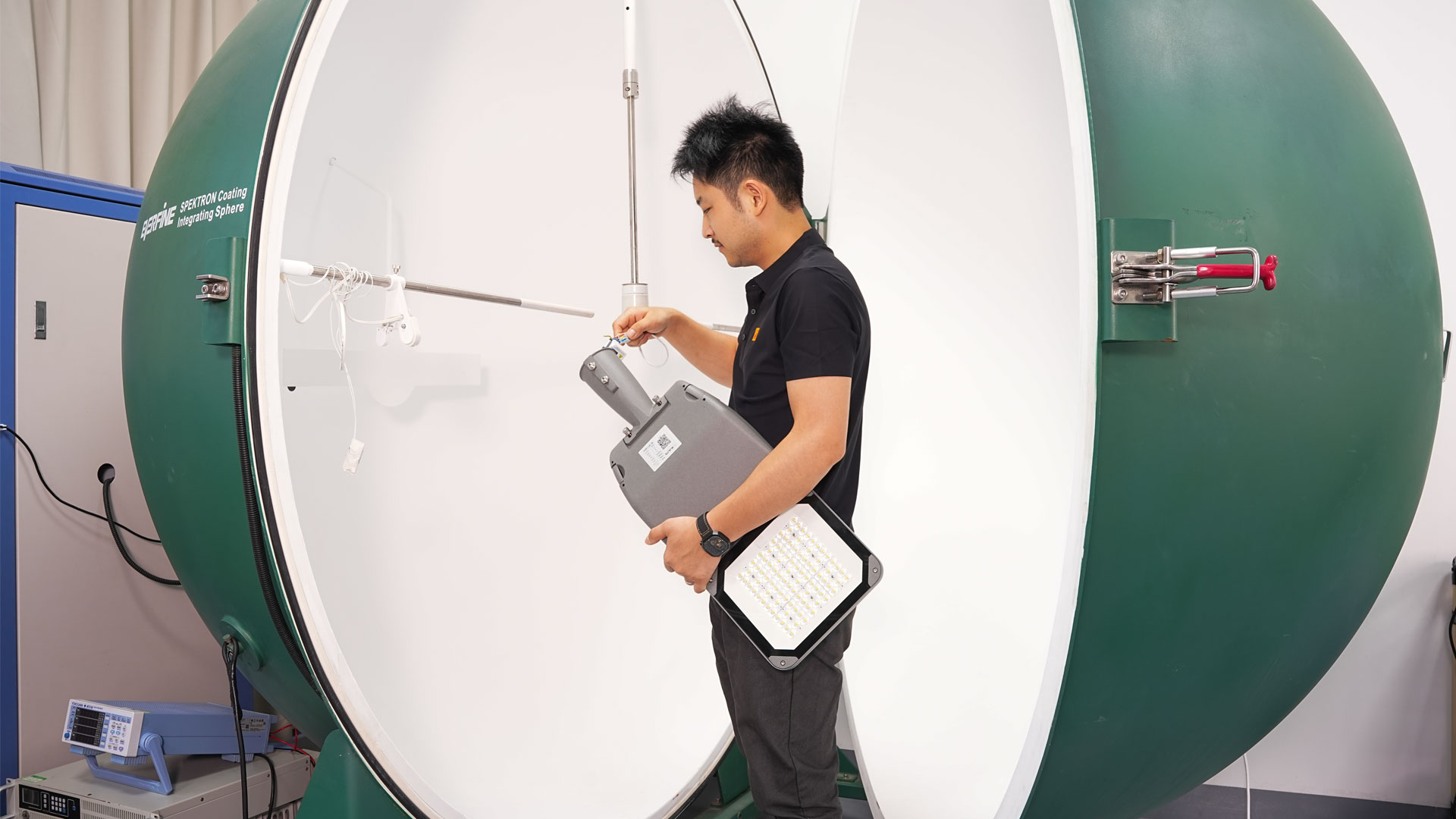
Flicker Test Methods: Accurately measuring flicker requires the use of specialized test methods.
The most common techniques include:
- Photometric Measurements: Assessing light intensity to quantify flicker.
- Time-Domain Analysis: Analyzing flicker by measuring time variations in light output.
- Frequency-Domain Analysis: Evaluating flicker based on frequency and periodicity.
- Subjective Assessment: Gathering human responses to identify perceptible flicker
These methods help quantify critical parameters such as flicker frequency, percent flicker, modulation depth, and flicker perception metrics, providing accurate data for manufacturers.
Mitigating Flicker in Lighting Systems: Several strategies are employed to reduce or eliminate flicker in lighting systems, ensuring a stable and comfortable lighting experience:
1.Design Considerations:
- High-Quality Components: Choosing components with stable performance can reduce the chances of flicker.
- Stable Power Supplies: Ensuring that power supplies are reliable and consistent is key to minimizing flicker.
2.LED Driver Control: LED drivers, which regulate the power supplied to lighting systems, play a crucial role in controlling flicker. Advanced technologies such as constant current control, dimming algorithms, and power factor correction can help reduce flicker and maintain stable light output.
3.Power Quality Improvement: Fluctuations in power supply can cause flicker. Using power conditioning equipment such as voltage regulators, power filters, and uninterruptible power supplies (UPS) can stabilize the power input and reduce flicker.
4.Flicker-Free Lighting Solutions: Manufacturers are increasingly focusing on producing flicker-free lighting products. These products undergo rigorous testing to ensure they meet strict standards, providing consumers with lighting systems that eliminate perceptible flicker.
5.Compliance with Standards: Adhering to established flicker standards like those from IEC, ANSI, IEEE, and Energy Star is vital for manufacturers. Compliance guarantees that lighting systems meet the highest quality standards, ensuring a flicker-free experience for users.
Future Developments and Research: Research into flicker measurement and mitigation continues to evolve. As technologies such as Li-Fi (Light Fidelity) emerge, assessing their potential effects on flicker becomes increasingly important. Ongoing advancements in testing methodologies and standard harmonization will ensure that future lighting systems are free from flicker, offering improved visual comfort and better health outcomes.
Conclusion: Flicker in lighting systems is a serious concern that impacts visual comfort and overall well-being. However, through the adoption of international standards and the use of reliable test methods, manufacturers can minimize flicker and provide high-quality, flicker-free lighting solutions. By continuing to refine testing techniques and harmonize standards, the industry is moving toward a future where flicker-free lighting is the norm, offering better visual experiences and enhancing human health.