العربية
 Español
 Pусский
 lingua italiana
 Français
 Deutsch
 Portugues



Road lighting refers to the illumination provided for roads and their associated facilities. It is used to enhance the safety of nighttime vehicle driving and pedestrian walking, preventing traffic accidents. Properly designed road lighting can improve traffic conditions, reduce driver fatigue, increase road capacity, and effectively reduce traffic accidents.
The quality of road lighting depends on the following aspects:
(1) Brightness of road illumination: Sufficient intensity is required to ensure that drivers and pedestrians can see obstacles, pedestrians, vehicles, and the surrounding conditions on the road.
(2) Uniformity of road illumination: The distribution should be reasonably even.
(3) Glare interference: Effective control of glare to minimize its harmful effects on drivers and pedestrians.
(4) Guiding function of lighting: Proper settings based on road conditions enable drivers and pedestrians to obtain information about the direction and gradient of the road ahead, which is particularly important for roads with many bends and intersections. Reasonable use of luminaires can help prevent glare.
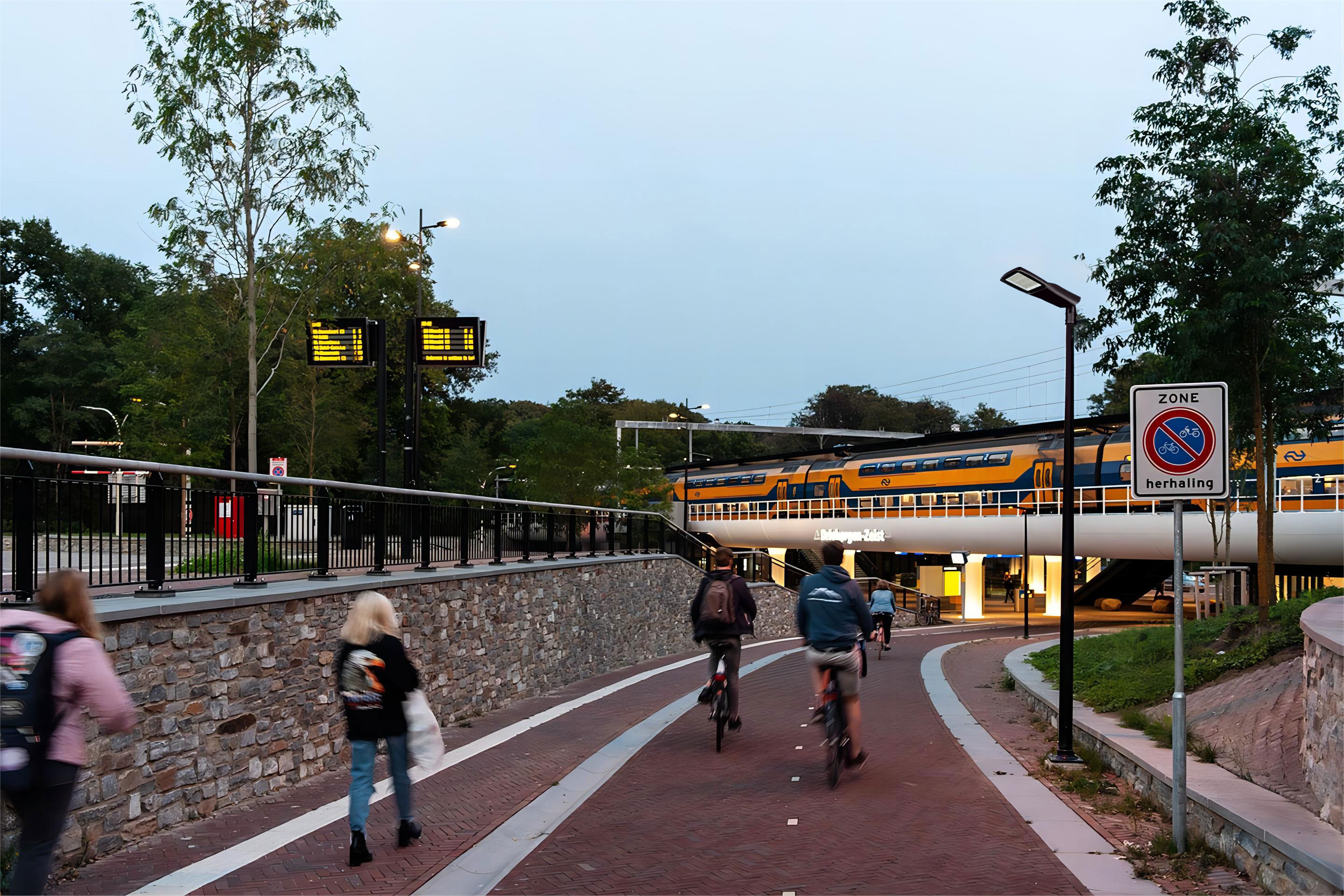
Good road lighting significantly contributes to urban development and enhances traffic safety for people.
Firstly, good road lighting can reduce traffic accidents, especially during nighttime driving when drivers must be cautious and identify traffic hazards and risk areas more quickly than during the day. Properly balanced light distribution and minimal glare play a decisive role in reducing the dangers of nighttime driving.
Secondly, good road lighting improves traffic efficiency. LED road lights can enhance road guidance and are not subject to light decay. Additionally, LED road lights can be integrated with the Internet of Things (IoT) for adaptive lighting that adjusts with traffic flow, providing the necessary conditions for smooth traffic and improving the overall traffic environment.
Thirdly, good road lighting can reduce the likelihood of crime. Crimes are more likely to occur at night, especially in less populated areas. Road lighting helps identify evidence and witnesses, reducing the motivation of criminals and enhancing urban security.
So, how to choose road lighting fixtures?
First, opt for LED lighting fixtures. LED lighting surpasses traditional fixtures in terms of energy efficiency, lighting effects, and lifespan. LED fixtures also allow easy adjustment of color temperature and output power, significantly improving lighting customization. Moreover, LED fixtures are environmentally friendly, reducing environmental pollution.
Second, consider the power supply method, which can be either retrofitting old fixtures or installing new ones. For major urban roads with well-established infrastructure, new fixtures can be installed. In rural areas or places with inconvenient access to the power grid, retrofitting old fixtures with solar-powered lights can provide both illumination and convenience.
Finally, taking the price into account, solar-powered lights require higher initial investment compared to grid-powered lights, but they do not incur ongoing costs. On the other hand, grid-powered LED lights have a higher initial cost compared to high-pressure sodium lights, but their energy efficiency and stability offer significant advantages in the long term.